

How AI Broke a 59-Year-Old Theoretical Ceiling
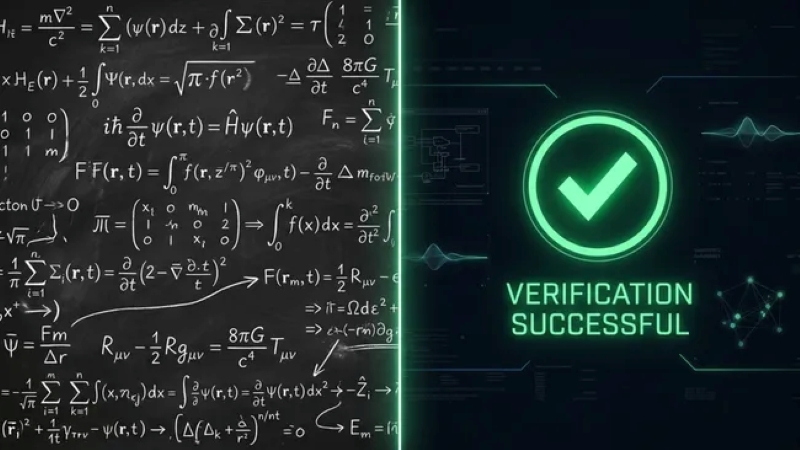
To understand why this finding matters, it helps to look back at 1967, when theoretical physicist Harold Grad formulated a famous conjecture. Grad proposed that stable, smooth 3D magnetic field configurations inside a fusion reactor (specifically without symmetry) were mathematically impossible unless pressure remained completely uniform. For nearly six decades, this idea acted as a massive bottleneck in fusion research, constraining how scientists modeled plasma confinement in complex, non-symmetric reactors like stellarators.
That theoretical limit began to crumble in September 2026, when University of Maryland researcher Matt Landreman published exact mathematical solutions disproving Grad’s conjecture—a discovery achieved using OpenAI’s GPT-6 Astra Pro. Building directly on that breakthrough, researchers deployed Google’s Gemini 4 Argon inside the multi-agent Antigravity environment. Within just a few hours, the AI expanded these foundational solutions into asymmetric, three-dimensional geometric spaces that had never been mathematically mapped before.
Rather than replacing human oversight, the AI acted as a force multiplier—executing months’ worth of intricate, multi-variable calculations in a single afternoon. While researchers still had to verify the underlying math, the result is a brand-new library of reference cases that will dramatically improve computer simulations for future fusion reactor design.
The Good, The Bad, and The Ugly
- The Good: AI is proving to be an extraordinary accelerator for "stuck" theoretical physics. By breaking the 59-year-old Grad conjecture, researchers now have exact 3D mathematical frameworks to test and refine plasma equilibrium models—paving the way for more efficient, better-designed stellarator reactors.
- The Bad: The headlines are heavily overhyping the news. AI did not "solve fusion" or bring us closer to abundant, clean grid energy tomorrow. This is a leap in mathematical modeling and simulation software, not an engineering breakthrough that produces real-world electricity.
- The Ugly: Hype-driven reporting obscures how scientific discovery actually works. Attributing full credit to the AI ignores the crucial human verification, context setting, and physical interpretation required by the research team—risking a public misunderstanding of what AI agents can actually achieve on their own.
